
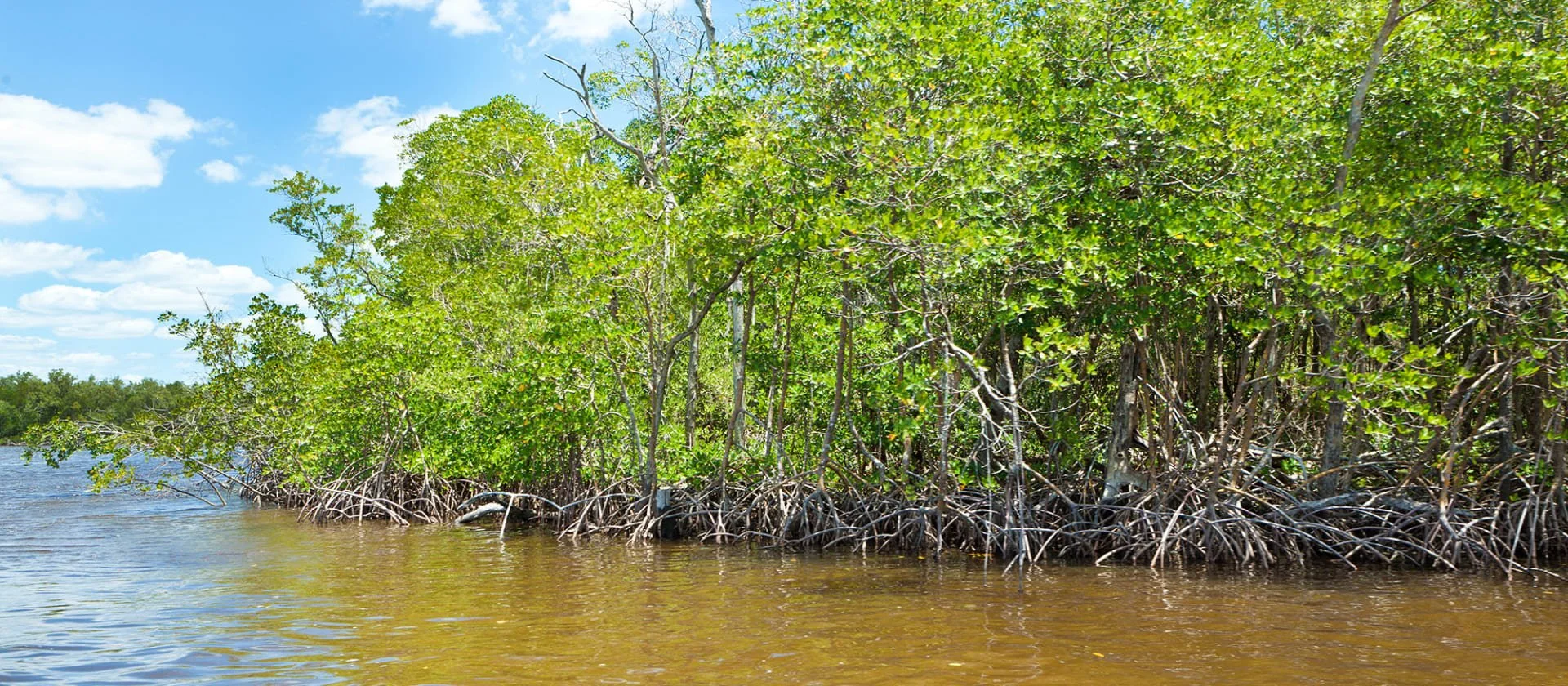
Role of mangrove ecosystems in the carbon exchange cycle
The Malone Disturbance Ecology Lab researches the role of mangroves in the carbon exchange cycle and climate change mitigation strategies.
Compounded effects on wetland greenhouse gas fluxes from climate change and water management along a saline to freshwater gradient
Saline and freshwater wetlands can be both sinks and sources of carbon to the atmosphere. To address uncertainties in the net climate mitigation potential of wetlands, this study measured ground-based and airborne fluxes to upscale carbon dioxide (CO2) and methane (CH4) fluxes using satellite-based surface reflectances across a gradient of saline to freshwater wetlands in Southern Florida.
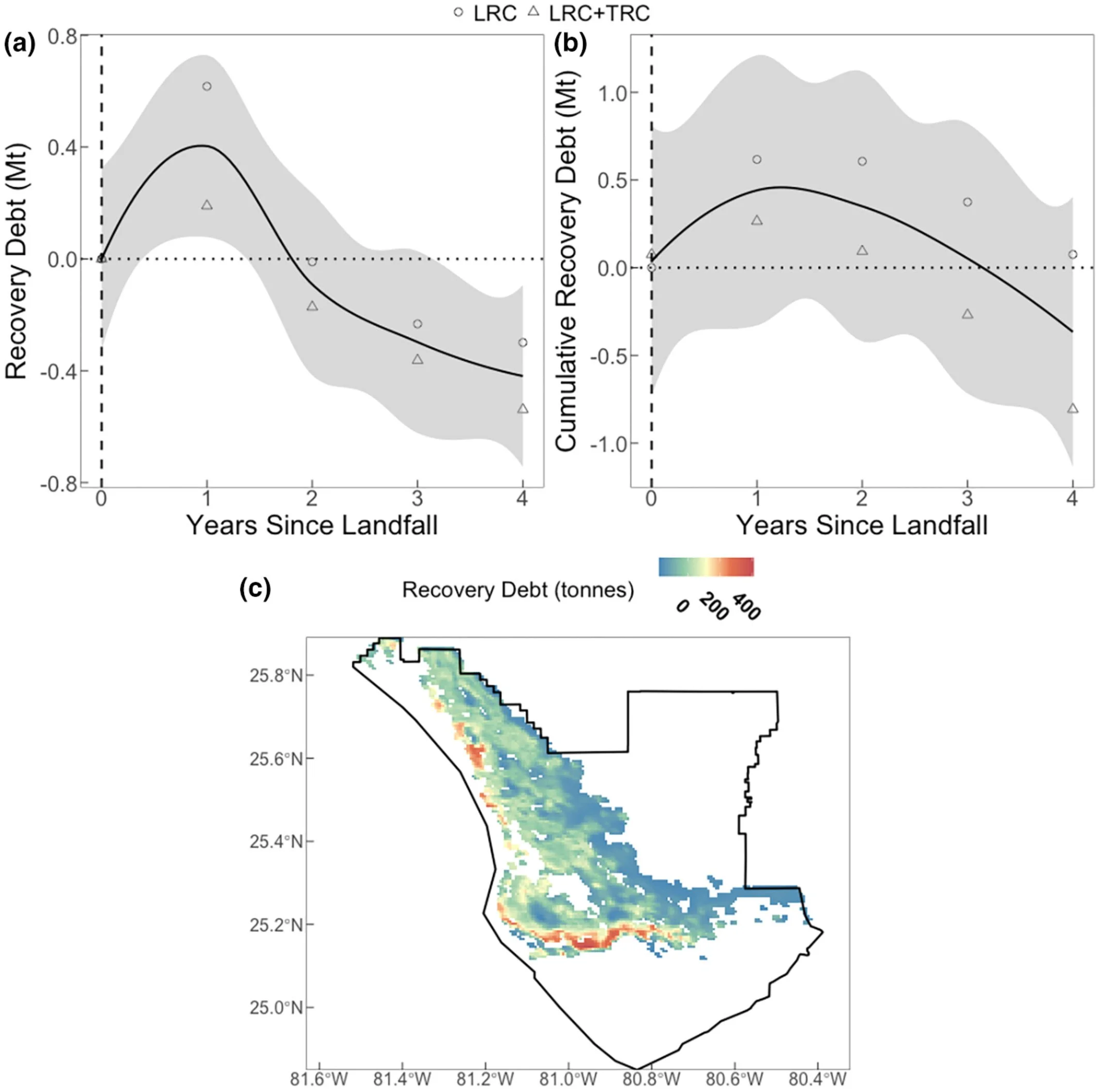
Resilience to Hurricanes Is High in Mangrove Blue Carbon Forests
High wind speeds during Hurricane Irma caused a decline in live vegetation and an increase in dead vegetation in the water column and in large floating mats. Combined with high water levels, the redistribution of organic matter has produced conditions that are capable of supporting higher carbon emissions. The primary objective of this research is to understand how changes in C pools influences the greenhouse C balance.
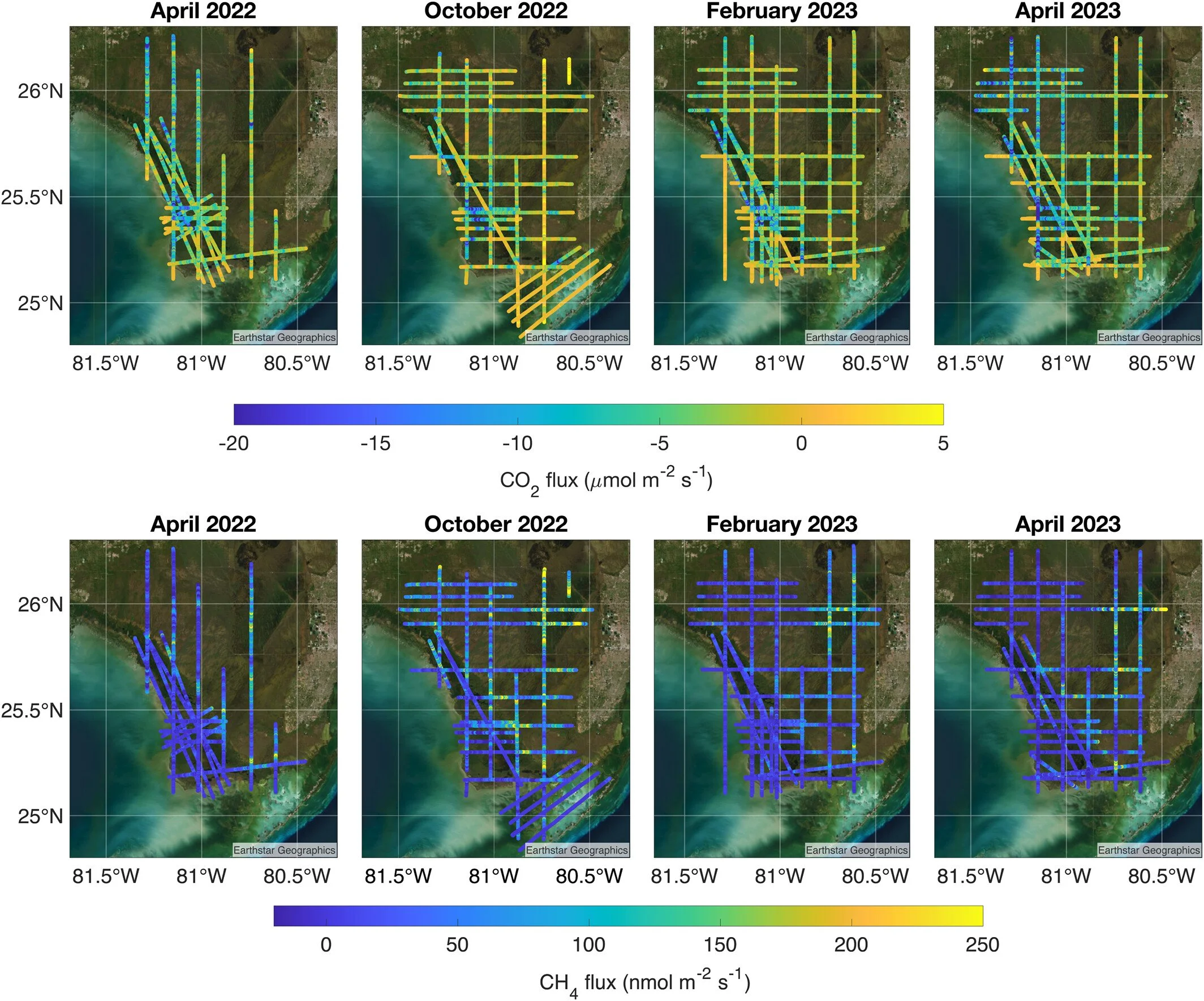
Assessment of Landscape-Scale Fluxes of Carbon Dioxide and Methane in Subtropical Coastal Wetlands of South Florida
By capturing and storing carbon dioxide (CO2), coastal wetlands are a key component of climate change mitigation strategies. As part of the NASA BlueFlux mission during 2022 and 2023, airborne eddy covariance observations of CO2 and methane (CH4) fluxes were collected in Southern Florida. Season, vegetation, ecosystem productivity, and water depth were found to have a large impact on carbon exchange.
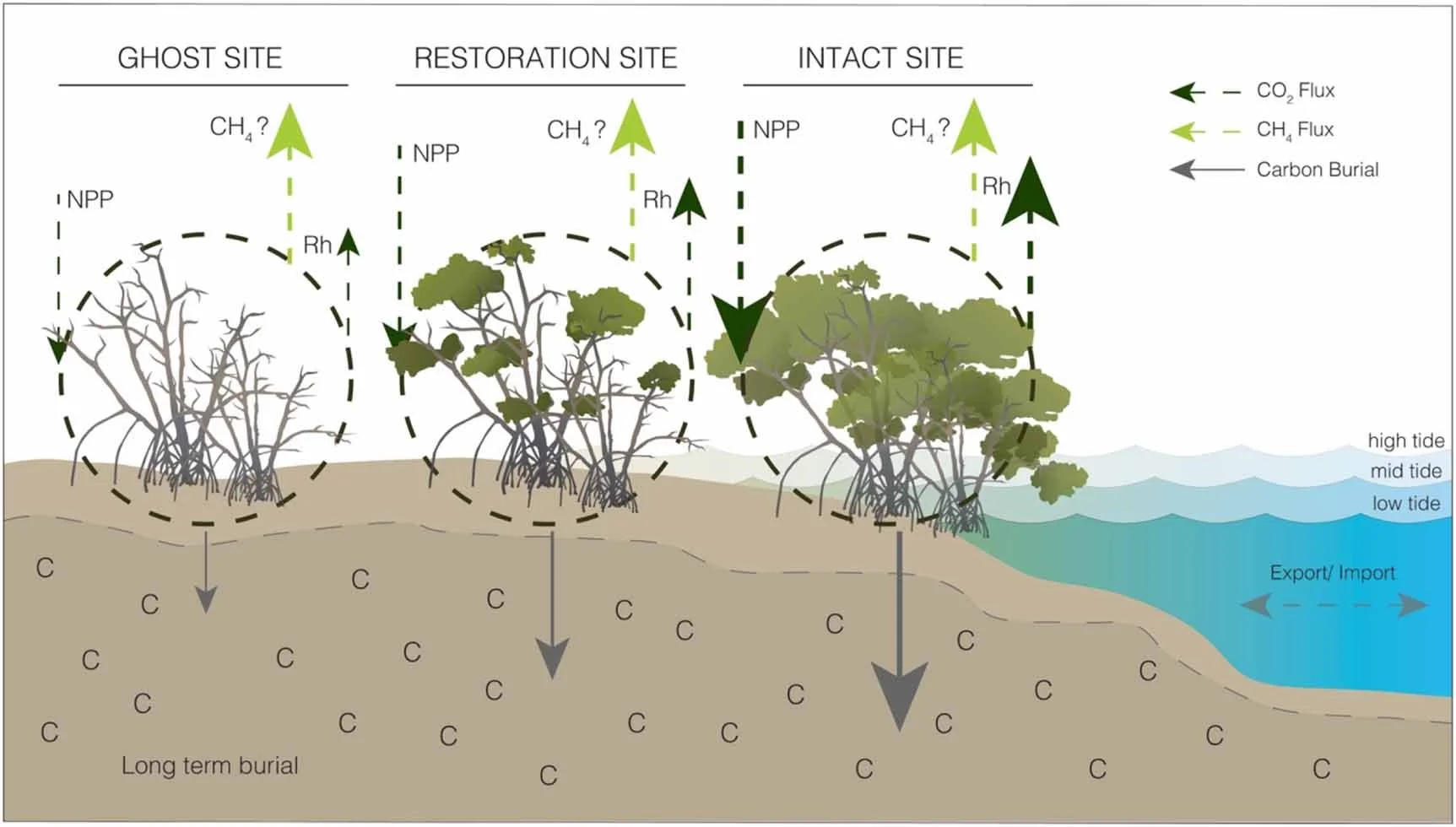
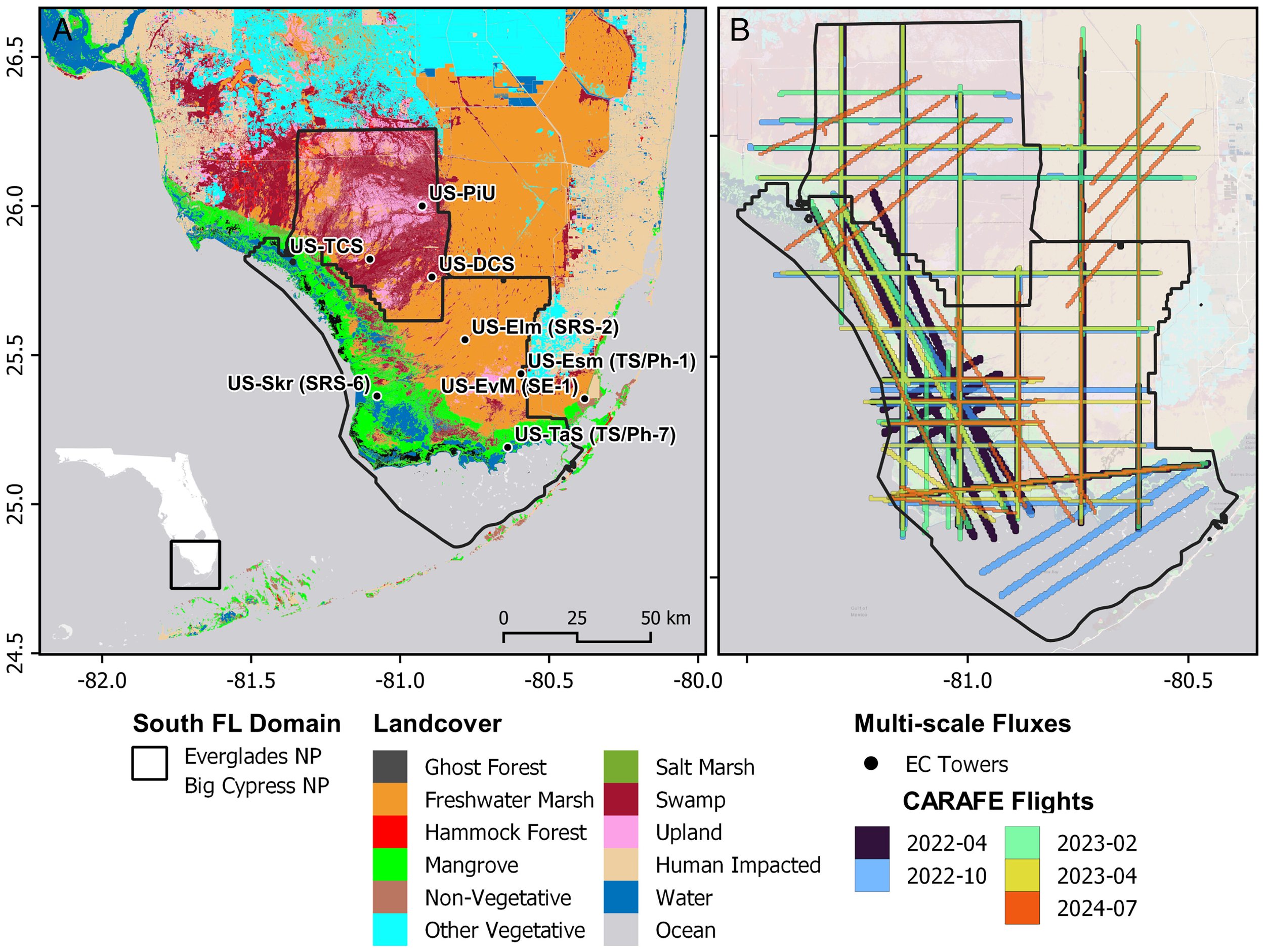
Multi-scale observations of mangrove blue carbon ecosystem fluxes: The NASA Carbon Monitoring System BlueFlux field campaign
Mangrove ecosystems are one of the most productive ecosystems on Earth, playing an important role in removing atmospheric carbon dioxide through “blue carbon”. Supported by NASA’s Carbon Monitoring System, the BlueFlux field campaign strives to develop carbon dioxide (CO2) and methane (CH4) products to help better understand mangrove restoration and conservation. The campaign measures CO2 and CH4 fluxes and long-term burial rates across Southern Florida and the Caribbean.
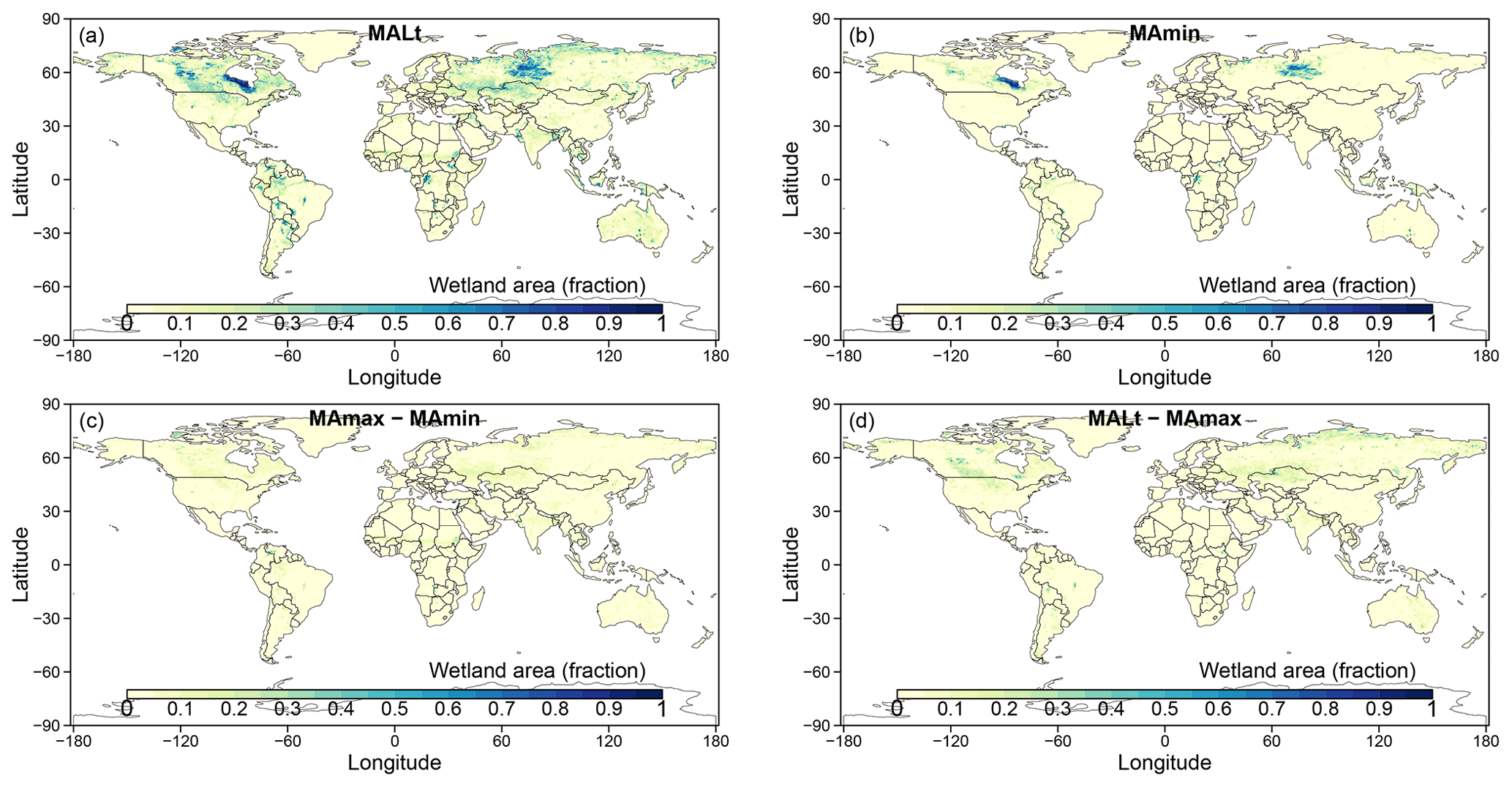
Development of the global dataset of Wetland Area and Dynamics for Methane Modeling (WAD2M)
The spatiotemporal distribution of wetlands is an important driver of fluctuations of global methane emissions, but inconsistent definitions of what comprises a “wetland” has led to uncertainty in estimates of methane emissions. To reconcile these inconsistencies, the global Wetland Area and Dynamics for Methane Modeling (WAD2M) dataset was developed. WAD2M combines a time series of surface inundation based on active and passive microwave remote sensing at a coarse resolution with six static datasets that discriminate inland waters, agriculture, shoreline, and non-inundated wetlands.
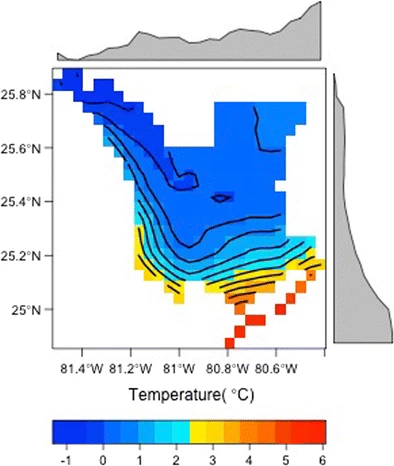
Sensitivity to Low-Temperature Events: Implications for CO2 Dynamics in Subtropical Coastal Ecosystems
In the Florida Everglades, extreme events can have a strong influence on shaping the landscape structure and community composition. Although the Everglades is in a subtropical region, low-temperature events (i.e. minimum daily temperatures <5 °C) occur when the polar jet stream moves towards the southeastern U.S. To determine the sensitivity of Everglades wetlands to low-temperature events and examine how these events alter CO2 dynamics, this study measured temporal patterns of CO2 and the normalized difference vegetation index.